


Table of Contents
- Key Points
- Oral Cancer Scope and Risk Factors
- Oral Cancer Symptoms
- The Role of Oral Cancer Screenings in Early Detection
- Oral Cancer Treatment
- Prevention Strategies
- Schedule Your Screening Today/a>
- Frequently Asked Questions
- References
Key Points
- Oral cancer can develop without pain in its early stages, making awareness of symptoms like non-healing sores, persistent patches, and unexplained numbness essential for timely detection.
- Routine oral cancer screenings performed during regular dental visits are one of the most effective tools for catching the disease early, when survival rates are significantly higher.
- Reducing risk through tobacco cessation, moderating alcohol intake, HPV vaccination, and maintaining consistent dental appointments can meaningfully lower your chances of developing oral cancer.
April is Oral Cancer Awareness Month,1 a critical time for dental professionals and patients alike to revisit the importance of early detection, routine screening, and informed prevention strategies. As your trusted dentist in Greenville, SC, we believe that awareness is the first and most powerful line of defense against a disease that affects tens of thousands of Americans each year.
While oral cancer may not receive the same level of public attention as other forms of the disease, its impact is significant. According to the Oral Cancer Foundation, approximately 58,000 new cases of oral or oropharyngeal cancer are diagnosed annually in the United States.2 The five-year survival rate, when the disease is caught early, is considerably higher than when it is detected at later stages—a fact that underscores the vital role your Greenville, SC, dentist plays in safeguarding your long-term health.
Oral Cancer Scope and Risk Factors
Oral cancer refers to malignancies that develop in the tissues of the mouth, tongue, gums, floor of the mouth, hard and soft palate, lips, and the lining of the cheeks. In broader clinical contexts, oropharyngeal cancers—those affecting the base of the tongue, tonsils, and throat—are often discussed alongside oral cancers due to overlapping risk profiles and diagnostic pathways.3
Several well-documented risk factors contribute to the development of oral cancer:
- Tobacco use: Cigarettes, cigars, pipes, and smokeless tobacco products all significantly elevate the risk. Individuals who use tobacco are six times more likely to develop oral cancers than non-users.
- Excessive alcohol consumption: Heavy alcohol use is an independent risk factor, and the combination of alcohol and tobacco use creates a compounding effect that dramatically increases susceptibility.
- Human papillomavirus (HPV): HPV-16, in particular, has been identified as a leading cause of oropharyngeal cancers, especially among younger, non-smoking populations. HPV-related oral cancers have risen substantially over the past two decades.
- Prolonged sun exposure: Extended ultraviolet exposure increases the risk of lip cancer, particularly on the lower lip.
- Age and gender: While oral cancer can occur at any age, individuals over 50 face a higher statistical risk, and men are approximately twice as likely as women to be diagnosed.
- Diet and nutrition: Research has suggested that diets low in fruits and vegetables may be associated with increased oral cancer risk.4
Understanding these risk factors is essential, but it is equally important to recognize that oral cancer can develop in individuals with no identifiable risk factors whatsoever. This reality reinforces the need for consistent professional evaluation by a qualified dentist Greenville SC patients can rely on for thorough, attentive care.
Oral Cancer Symptoms
One of the most challenging aspects of oral cancer is that it can develop silently, often without pain in its earliest stages. By the time a patient notices something unusual, the disease may have already progressed.5 This is precisely why understanding the signs of oral cancer is so important, and why regular dental visits at our dental offices in Greenville, SC, are about far more than cleanings and cavity checks.
However, in many cases, oral cancer does produce symptoms. Common ones include:
- A sore or ulceration in the mouth that does not heal within two to three weeks
- Persistent red or white patches on the gums, tongue, tonsils, or lining of the mouth
- A lump, thickening, or rough spot on the lips, gums, or other oral tissues
- Difficulty chewing, swallowing, or moving the jaw or tongue
- Chronic sore throat or a feeling that something is lodged in the throat
- Unexplained numbness or tenderness in the mouth, face, or neck
- Ear pain that occurs without an identifiable infection or other cause
- Significant, unexplained weight loss
- A change in the way dentures or dental appliances fit
- Hoarseness or other persistent changes in the voice
Any of these symptoms of oral cancer warrants professional evaluation. A single persistent sore that refuses to heal, for instance, is a well-recognized sign of oral cancer that should never be dismissed as inconsequential. If you experience any of these symptoms, make scheduling an appointment a priority.
In urgent situations—such as sudden swelling, uncontrolled bleeding in the oral tissues, or rapidly worsening symptoms—patients should seek immediate care. ProGrin is here to serve as your emergency dentist in Greenville, SC.
The Role of Oral Cancer Screenings in Early Detection
As mentioned, the single most effective tool in the fight against oral cancer is the routine oral cancer screening. This brief, non-invasive examination is typically performed during your regular dental visit and can identify suspicious tissue changes long before symptoms become apparent to the patient.
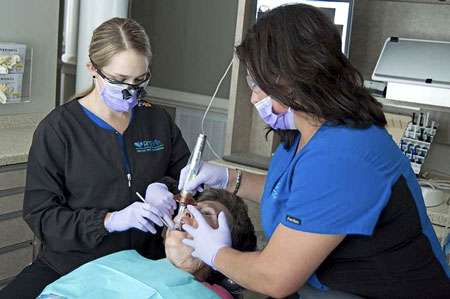
During a screening for oral cancer, your dentist conducts a systematic visual and tactile examination of all the soft tissues in and around the mouth, including:
- The lips, gums, and inner cheeks
- The tongue (top, bottom, and sides)
- The floor and roof of the mouth
- The back of the throat and tonsil area
- The lymph nodes and surrounding tissue of the jaw and neck
Your dentist is looking for asymmetries, discolorations, unusual textures, and any masses or lesions that may indicate abnormal cellular activity. In some cases, adjunctive screening technologies, such as specialized lights or tissue dyes, may be used to enhance the visualization of potentially precancerous changes.
If an area of concern is identified, a biopsy or referral to an oral and maxillofacial specialist may be recommended for further evaluation. Early-stage detection through oral cancer screening is directly correlated with better treatment outcomes and higher survival rates, making this simple examination one of the most consequential components of your dental visit.
Among dentists in Greenville SC, ProGrin Family Dental is committed to integrating thorough oral cancer screening into the standard of care we provide to every patient. We encourage all patients—regardless of age or perceived risk level—to maintain consistent screening schedules as part of their overall oral health routine.
Oral Cancer Treatment
A diagnosis of oral cancer naturally raises urgent questions about next steps. While every case is unique and treatment planning is determined by the specific type, location, and stage of the cancer, there are several primary options for oral cancer treatment:
- Surgery: Surgical removal of the tumor is frequently the first line of treatment for localized oral cancers. Depending on the extent of the disease, surgery may range from minor excisions to more complex procedures involving reconstruction of affected oral or facial structures.
- Radiation therapy: High-energy radiation is used to target and destroy cancer cells. Radiation may be employed as a primary treatment for smaller tumors or as an adjunctive therapy following surgery to address any remaining malignant tissue.6
- Chemotherapy: Systemic drug therapy may be used in conjunction with radiation (chemoradiation) or in cases where the cancer has spread beyond the oral cavity. Chemotherapy protocols are tailored to the individual and may involve one or a combination of pharmaceutical agents.
- Targeted therapy: Newer pharmacological approaches target specific molecular pathways involved in cancer cell growth. Cetuximab, for example, targets the epidermal growth factor receptor (EGFR), which is overexpressed in many oral cancers.7
- Immunotherapy: For recurrent or metastatic cases, immunotherapy drugs that help the body’s own immune system recognize and attack cancer cells have become an increasingly important component of oral cancer treatment strategies.
Recovery and rehabilitation following treatment may involve speech therapy, nutritional counseling, dental reconstruction, and psychological support. The multidisciplinary nature of oral cancer care highlights the importance of a strong healthcare team, one that begins with your dentist Greenville SC families count on for early identification and ongoing monitoring.
Prevention Strategies
While not all cases of oral cancer are preventable, evidence-based strategies can meaningfully reduce your risk:
- Eliminate tobacco use entirely: This is the single most impactful step any individual can take to lower oral cancer risk.
- Moderate alcohol consumption: Limiting intake reduces a well-established independent risk factor.
- Discuss HPV vaccination with your physician: The HPV vaccine has demonstrated effectiveness in reducing the incidence of HPV-related oropharyngeal cancers.8
- Protect your lips from UV exposure: Use a lip balm with SPF protection, particularly during prolonged outdoor activity.
- Maintain a balanced, nutrient-rich diet: A diet abundant in fruits, vegetables, and antioxidants supports overall immune function and cellular health.
- Perform periodic self-examinations: Familiarize yourself with the normal appearance and feel of your oral tissues so that changes are more readily noticed.
- Keep regular dental appointments: Consistent visits to your Greenville SC dentist ensure that professional screenings are performed at appropriate intervals and that any emerging concerns are addressed without delay.
Schedule Your Screening Today
This Oral Cancer Awareness Month, take a proactive step toward protecting your health. Whether you are due for a routine examination or have noticed something in your mouth that concerns you, we encourage you to reach out. As a leading dentist in Greenvillem SC, ProGrin Family Dental is here to provide the thorough, professional care you and your family deserve.
Contact ProGrin Family Dental today to schedule your oral cancer screening and take control of your oral health with confidence.
Frequently Asked Questions About Oral Cancer
How often should I get an oral cancer screening?
Most dental professionals recommend an oral cancer screening at least once per year as part of your routine dental examination. Patients with elevated risk factors—such as tobacco use, heavy alcohol consumption, or a history of HPV—may benefit from more frequent evaluations. Your dentist in Greenville SC can help determine the appropriate screening schedule based on your individual health profile.
What does an oral cancer screening involve?
A screening for oral cancer is a brief, painless examination conducted during your regular dental visit. Your dentist will visually and manually inspect the soft tissues of your mouth, tongue, gums, throat, and neck for any irregularities such as lumps, discolorations, or non-healing lesions. If anything suspicious is identified, further diagnostic steps such as a biopsy may be recommended.
Can oral cancer be cured?
When detected in its early stages, oral cancer has a significantly higher rate of successful treatment. The prognosis depends on the type, location, and stage of the cancer at diagnosis, as well as the patient’s overall health. Early identification through routine screenings is one of the most effective ways to improve outcomes.
References
- ‘Oral Cancer Awareness Month,” American Association of Oral and Maxillofacial Surgeons, retrieved on April 15, 2026, from: https://aaoms.org/practice/promotional-materials/oral-cancer-awareness-month/.
- “Oral Cancer Facts: Rates of occurrence in the United States,” The Oral Cancer Foundation, retrieved on April 15, 2026, from: https://oralcancerfoundation.org/facts/.
- “Oropharyngeal Cancer,” Cleveland Clinic, January 2026, https://my.clevelandclinic.org/health/diseases/12180-oropharyngeal-cancer.
- Soussan Irani, “New Insights into Oral Cancer—Risk Factors and Prevention: A Review of Literature,” International Journal of Preventive Medicine, December 2020, https://pmc.ncbi.nlm.nih.gov/articles/PMC8000242/.
- Jessica Sonal Monteiro, Sowmya M. Kumar, Yash P. Merchant, et al., “Red flags of oral cancer: Unravelling the early symptoms – A literature review,” Oral Oncology Reports, September 2025, https://www.sciencedirect.com/science/article/pii/S2772906025000524.
- “Radiation Therapy for Oral Cavity and Oropharyngeal Cancer,” American Cancer Society, March 2026, https://www.cancer.org/cancer/types/oral-cavity-and-oropharyngeal-cancer/treating/radiation-therapy.html.
- Anusha Chidharla, Meghana Parsi, and Anup Kasi, “Cetuximab,” National Center for Biotechnology Information, National Library of Medicine, May 2023, https://www.ncbi.nlm.nih.gov/books/NBK459293/.
- Sifon Ndon, Amritpal Singh, Patrick K. Ha, “Human Papillomavirus-Associated Oropharyngeal Cancer: Global Epidemiology and Public Policy Implications,” Cancers, August 2023, https://pmc.ncbi.nlm.nih.gov/articles/PMC10452639/.

Dr. Greg Ayers has over 35 years of experience running his own dental practice. He is the Chairman and Clinical Director of ProGrin Dental and Cosmetics, which he and his son founded in 2012. Dr. Ayers is a graduate of the Medical University of South Carolina’s College of Dental Medicine, then furthered his dental education at the Pankey Institute for Advanced Dental Learning. Dr. Ayers is also a graduate of the acclaimed Nash Institute for Dental Learning, and he currently serves as a teaching mentor at the Institute, working with doctors and healthcare professionals from around the world. Dr. Ayers has also authored two books: “The Service Prescription – Healthcare the Way it Was Meant to Be,” and a motivational book entitled “SPARK, Igniting Your Dreams.”