



Table of Contents
- Key Points
- What Is Sedation Dentistry?
- Common Forms of Dental Sedation
- Who Benefits Most From Sedation
- Safety, Screening, and Monitoring
- Sedation and Urgent Care
- Choosing a Practice
- Schedule a Sedation Consultation Today
- Frequently Asked Questions
- References
Key Points
- Sedation dentistry uses medication to keep patients calm and comfortable during dental treatment, ranging from mild relaxation with nitrous oxide to deeper sedation delivered intravenously.
- The right level of sedation depends on the procedure, the patient’s medical history, and the degree of anxiety involved, which is why every plan begins with a comprehensive health review.
- Sedation is not reserved for oral surgery alone. It can also make routine cleanings, restorative work, and urgent treatment possible for patients who have avoided care for years.
For many adults, the barrier to dental care is not cost, insurance, or scheduling. It is dread.
Some patients trace it to a difficult childhood appointment. Others describe a strong gag reflex, sensitivity to sound, or the simple discomfort of holding still with the mouth open.
Whatever the origin, avoidance has a cost: small issues become large problems, and the treatment eventually required is more involved than the treatment that was skipped.
Sedation dentistry exists to interrupt that cycle. By using medication to lower anxiety and physical awareness during treatment, a qualified dentist in Greenville, SC can complete work that a fearful patient would otherwise postpone indefinitely. This article explains how sedation works, what each level entails, and how to evaluate practices when comparing dentist offices in Greenville, SC.
What Is Sedation Dentistry?
Sedation dentistry refers to the controlled use of medication to produce a relaxed, drowsy, or minimally responsive state while a dental procedure is being performed.1 Note that sedation medication does not replace local anesthetic. Numbing agents still block sensation at the treatment site. Sedation addresses everything else, including anxiety, restlessness, and awareness of time passing.
The American Dental Association (ADA) recognizes a spectrum of sedation levels rather than a single technique, as well as guidelines for administering each.2 There are also training, monitoring, and permitting requirements for the treating dentist.
Which option is most appropriate depends on each patient’s responsiveness, not on the route the medication takes, which means the same drug can produce different depths depending on dosage and individual response.
The categories break down as follows:
- Minimal sedation: The patient remains awake and able to respond normally, but feels noticeably calmer. Breathing and cardiovascular function are unaffected.
- Moderate sedation: The patient is conscious but drowsy, responds to direction, and often remembers little of the appointment afterward.
- Deep sedation: The patient is on the edge of consciousness and responds only to repeated or firm stimulation.
- General anesthesia: The patient is fully unconscious and cannot be roused. This level is reserved for specific surgical cases and specialized settings.
Common Forms of Dental Sedation
There are three main types of sedation offered at ProGrin.
1. Nitrous Oxide
Often referred to as “laughing gas,” nitrous oxide is inhaled through a small nasal mask and mixed with oxygen. Its defining advantage is speed in both directions: the effect begins within minutes and clears within minutes once the mask is removed.
Patients typically describe a light, floating sensation and a reduced sense of urgency. Because it wears off so quickly, most patients can drive themselves home afterward, which makes it a practical choice for routine visits.
2. Oral Conscious Sedation
Oral sedation uses a prescription medication, usually from the benzodiazepine family, taken shortly before the appointment. It produces a deeper calm than nitrous oxide and frequently leaves patients with a hazy or incomplete memory of the procedure.
The tradeoff is timing. The medication takes longer to reach full effect, lingers well past the appointment, and requires a companion to handle transportation in both directions.
3. IV Sedation Dentistry
IV sedation dentistry delivers medication directly into the bloodstream through a small needle, typically placed in the arm or hand. Several features make this approach valuable for complex or lengthy cases:
- Precision: Because the medication enters circulation immediately, the dentist can adjust the depth of sedation during the procedure rather than committing to a fixed dose at the outset.
- Continuity: Long appointments that would otherwise require multiple visits can often be consolidated into one, which is particularly useful for extensive restorative work.
- Amnesia: Most patients retain little or no memory of the appointment, which can be significant for those whose anxiety is rooted in a prior experience.
Patients considering IV sedation dentistry should expect a more thorough intake process, including a review of medications, allergies, and cardiopulmonary history, along with fasting instructions before the appointment.
Who Benefits Most From Sedation
Sedation is frequently associated with wisdom teeth and implant surgery, but the candidate list is broader than that. Patients who tend to benefit include those who:
- Experience clinical dental anxiety or panic symptoms in the treatment chair
- Have a pronounced gag reflex that interferes with impressions, radiographs, or rear-molar access
- Struggle to sit comfortably for long stretches due to back, neck, or joint conditions
- Metabolize local anesthetic quickly or have historically had difficulty achieving adequate numbness
- Require several procedures that would be more comfortably combined into a single longer visit
- Have sensory sensitivities or developmental conditions that make a clinical environment overwhelming
- Have delayed care for years and now face a treatment plan large enough to feel discouraging
That last group deserves particular attention. Patients returning after a long absence often assume they will be lectured. A well-run practice does the opposite: it sequences the work, addresses the urgent items first, and uses sedation to make the goals and outcomes achievable.
Safety, Screening, and Monitoring
Sedation is a well-established procedure in dentistry, and the profession’s safety standards have only increased in modern times. The aforementioned ADA’s sedation and anesthesia guidelines were updated in 2025 and have strengthened expectations around supplemental oxygen, emergency preparedness, documented protocols, and recurring team training drills.
In a quality, compliant practice, a sedation appointment includes:
- A pre-treatment health review covering medical conditions, current prescriptions, supplements, allergies, and prior reactions to anesthesia
- Written instructions on fasting, medication timing, and transportation arrangements
- Continuous monitoring of oxygen saturation, blood pressure, heart rate, and responsiveness throughout the procedure
- Emergency equipment and reversal medications kept on hand, with staff trained in their use
- A supervised recovery period before discharge, as well as written aftercare instructions for the patient and their companion
Patients are entitled to ask directly about a dentist’s sedation permit, training, and monitoring protocol. Any practice offering sedation should answer those questions without hesitation.
Sedation and Urgent Care
Dental emergencies rarely arrive at a convenient moment, and pain has a way of amplifying existing anxiety. A cracked molar, an abscess, or a knocked-out tooth requires prompt attention regardless of how the patient feels about treatment. When searching for an emergency dentist in Greenville, SC, it is worth confirming that the practice can also offer sedation, because an anxious patient in acute pain is often the person who most needs it.
Note that sedation options in an emergency setting are somewhat narrower than in a planned visit. Fasting requirements, for instance, may rule out deeper sedation on short notice. Nitrous oxide, however, requires no advance preparation and can usually be offered the same day.
Choosing a Practice
Patients searching for “sedation dentistry near me” will find that not every general practice offers every level of sedation, and that credentials can vary between offices. A few questions can quickly clarify the picture: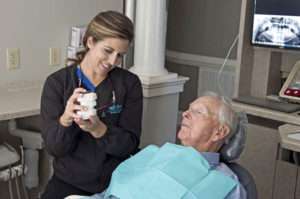
- Which sedation options does the practice provide in-house, and which require a referral?
- Who administers the sedation, and what certifications and permits do they hold?
- How is the patient monitored during the procedure, and by whom?
- What does the recovery period look like, and how long should the patient plan to stay?
- How is sedation billed, and what portion does dental insurance typically cover?
Location matters too, particularly for procedures that require a driver. A dentist on Augusta Road in Greenville, SC, is convenient for patients near downtown, and the surrounding neighborhoods, which reduces the logistical strain of arranging a ride on both ends of an appointment. Fortunately, ProGrin has many locations across the Upstate, which gives patients myriad options, even in an emergency.
Schedule a Sedation Consultation Today
Dental anxiety is a common and legitimate reason to postpone care, but it does not have to be the reason a treatment plan goes unfinished. A conversation about sedation options is the first step, and it does not commit you to a procedure.
ProGrin Dental welcomes patients across the Upstate who have been putting off treatment, whether the concern is a single filling or a plan that has been waiting for years. Contact our office to discuss which sedation approach fits your health history, your comfort level, and the work in front of you.
Frequently Asked Questions
Will I be unconscious during sedation dentistry?
In most cases, no. Nitrous oxide and oral sedation leave patients conscious and able to respond, and even moderate IV sedation typically keeps patients responsive. Full unconsciousness requires general anesthesia, which is used selectively and in appropriate settings.
Is sedation dentistry safe?
For healthy patients treated by a properly trained and permitted dentist, sedation has a strong safety record. Risk is managed through pre-treatment screening, continuous monitoring, and adherence to national guidelines. Existing medical conditions are evaluated in advance so the plan can be adjusted accordingly.
Does dental insurance cover sedation?
Coverage varies. Many plans cover sedation when it is medically necessary, such as during oral surgery, and treat it as elective for routine care. Our team can verify benefits before the appointment, so there are no billing surprises down the road.
How long does it take to recover from dental procedures requiring sedation?
It can depend on the person, but nitrous oxide typically clears within minutes. Oral and IV sedation generally require several hours of recovery, and patients should plan to rest for the remainder of the day with a responsible adult available.
Can children receive sedation?
Yes, under pediatric-specific protocols with weight-based dosing and monitoring standards, sedation dentistry is appropriate for younger patients. Pediatric sedation follows a separate set of professional guidelines and should be handled by a provider trained in treating children.
References
- “Sedation Dentistry,” Cleveland Clinic, August 2025, https://my.clevelandclinic.org/health/treatments/22275-sedation-dentistry.
- “Anesthesia and Sedation,” American Dental Association, April 20226, https://www.ada.org/resources/ada-library/oral-health-topics/anesthesia-and-sedation.

Dr. Greg Ayers has over 35 years of experience running his own dental practice. He is the Chairman and Clinical Director of ProGrin Dental and Cosmetics, which he and his son founded in 2012. Dr. Ayers is a graduate of the Medical University of South Carolina’s College of Dental Medicine, then furthered his dental education at the Pankey Institute for Advanced Dental Learning. Dr. Ayers is also a graduate of the acclaimed Nash Institute for Dental Learning, and he currently serves as a teaching mentor at the Institute, working with doctors and healthcare professionals from around the world. Dr. Ayers has also authored two books: “The Service Prescription – Healthcare the Way it Was Meant to Be,” and a motivational book entitled “SPARK, Igniting Your Dreams.”