


Table of Contents
- Key Points
- Understanding the Mouth-Body Link
- When Dental Health Becomes an Emergency
- Building a Preventive Routine
- A Whole-Body Approach to Dental Care
- Frequently Asked Questions
- References
Key Points
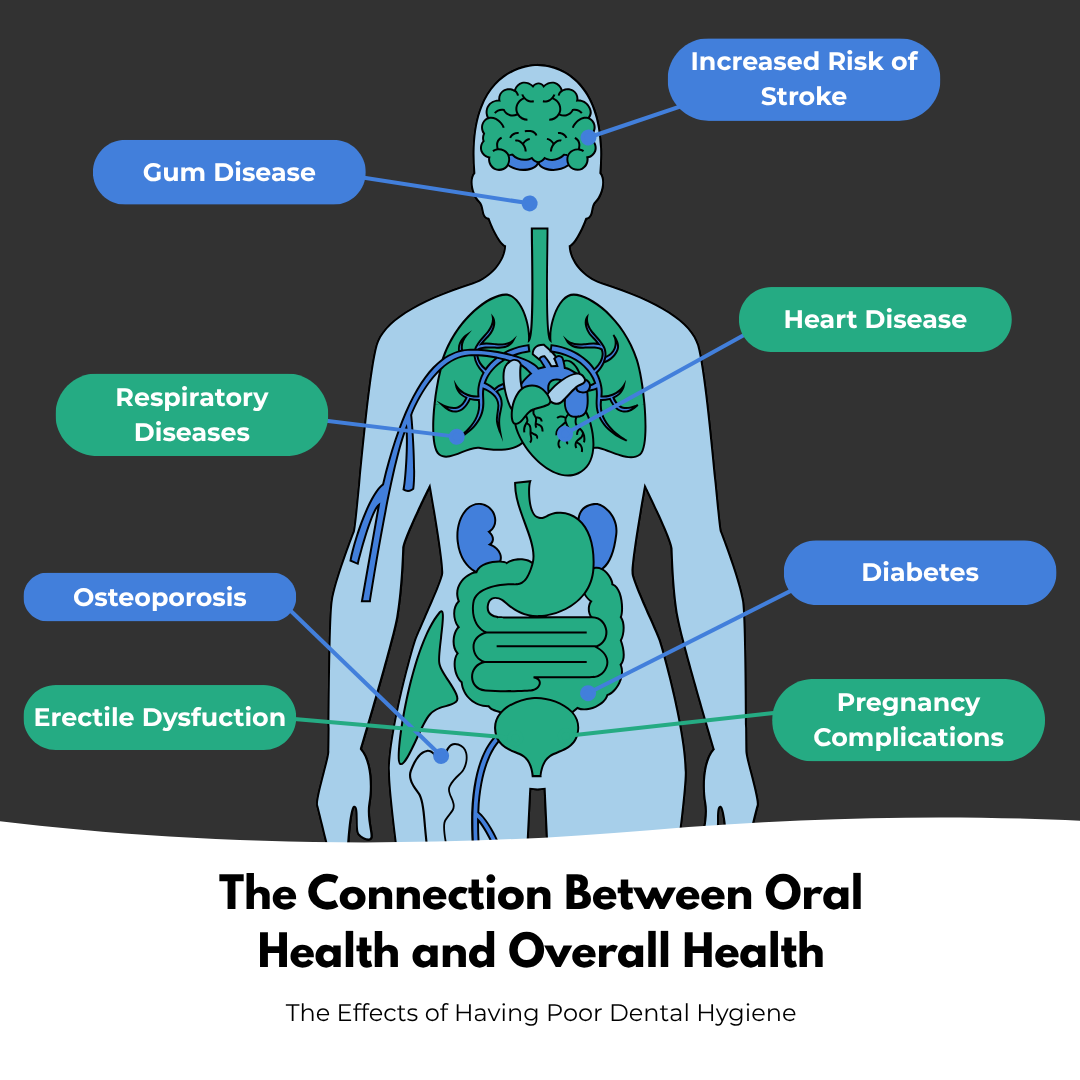
- Oral health is directly linked to systemic conditions, including cardiovascular disease, diabetes, respiratory infection, adverse pregnancy outcomes, and cognitive decline, with chronic inflammation and oral bacteria entering the bloodstream identified as primary mechanisms.
- The diabetes-gum disease relationship is bidirectional, and certain oral conditions, particularly abscesses and severe infections, constitute medical emergencies that require immediate professional attention.
- Routine preventive care every six months, combined with consistent at-home hygiene, remains the most evidence-based strategy for protecting both oral and overall health.
For most of history, dentistry was treated as a discipline largely separate from general medicine, with the mouth viewed as a closed system distinct from the rest of the body.1 Modern research has overturned that assumption.
A growing body of clinical evidence demonstrates that dental health is intimately connected to nearly every major system in your body, from your cardiovascular system to your endocrine function, respiratory tract, and even cognitive performance.2 Understanding this oral-systemic connection has become essential not only for dental professionals but for patients seeking a comprehensive approach to long-term wellness.
Understanding the Mouth-Body Link
The mouth is one of the most biologically active environments in the human body. It hosts more than 700 species of microbes, many of which are beneficial (though not all).3 When dental health falters, however, harmful bacteria can multiply, triggering inflammation and infection in the gum tissues. This condition, known as periodontal disease, affects about 2 in every 5 American adults.4
When gums become inflamed, the protective barrier between the mouth and the bloodstream weakens. Bacteria and inflammatory byproducts can then enter circulation, traveling to other parts of the body and contributing to systemic inflammation, which is now recognized as an underlying driver of many chronic diseases.
Key mechanisms researchers have identified include:
- Bacteremia: The introduction of oral bacteria into the bloodstream during chewing, brushing, or dental procedures, particularly in patients with active gum disease.
- Inflammatory cascade: The release of cytokines and other inflammatory markers that travel throughout the body and affect distant tissues.
- Shared risk factors: Conditions such as smoking, poor diet, and chronic stress that simultaneously harm both oral and systemic health.
Cardiovascular Disease
Among the most extensively studied connections is the one between gum disease and cardiovascular health. Multiple peer-reviewed studies have shown that individuals with periodontitis have a measurably higher risk of heart disease, stroke, and clogged arteries, due in part to increased plaque buildup in arteries.5
Theories explaining this relationship include:
- Oral bacteria such as Porphyromonas gingivalis have been detected within atherosclerotic plaques, suggesting direct involvement in arterial inflammation.
- Chronic systemic inflammation from gum disease may accelerate the buildup of arterial plaque.
- Endothelial dysfunction, an early marker of cardiovascular trouble, has been observed to improve following periodontal treatment.
For patients with existing heart conditions, maintaining excellent dental health through consistent home care and regular professional visits is more than cosmetic care. It is part of a broader cardiovascular risk-management strategy.
Diabetes
The relationship between diabetes and oral health is one of the clearest examples of bidirectional disease influence. Patients with poorly controlled diabetes are more vulnerable to gum disease because elevated blood sugar levels feed harmful oral bacteria and impair the body’s ability to fight infection. At the same time, severe periodontal disease can make blood sugar harder to control, creating a self-reinforcing cycle.
Research has shown that effective periodontal treatment can lead to modest but meaningful improvements in HbA1c levels in patients with type 2 diabetes.6 For diabetic patients in particular, partnering with an experienced dentist Greenville SC residents trust, and one who understands the systemic implications of care, is essential.
Respiratory Health
Bacteria from the mouth can be aspirated into the lungs, where they may contribute to respiratory infections, including pneumonia. This risk is particularly relevant for older adults and individuals with compromised immune systems or underlying lung conditions. Studies have found that improving oral hygiene in nursing home residents significantly reduces the incidence of aspiration pneumonia, underscoring how routine attention to dental health can be life-saving in vulnerable populations.7
Pregnancy and Birth Outcomes
Hormonal changes during pregnancy increase the risk of a condition called pregnancy gingivitis, and untreated periodontal disease has been associated with adverse outcomes such as preterm birth and low birth weight.8 Most professional organizations now recommend that expectant mothers continue routine dental care throughout pregnancy.
Cognitive Health and Alzheimer’s Disease
Emerging research has begun to link chronic gum disease to an increased risk of cognitive decline and Alzheimer’s disease.9 One study identified Porphyromonas gingivalis, a bacterium associated with periodontitis, in the brain tissue of Alzheimer’s patients. While more research is needed to establish causation, the findings reinforce the importance of preventing chronic oral infections, particularly as patients age.
When Dental Health Becomes an Emergency
Some oral health issues require immediate attention because of their potential to escalate into serious systemic problems. A dental abscess, for example, is a localized bacterial infection that can spread to surrounding tissues, the bloodstream, or even the brain if left untreated. Patients experiencing severe tooth pain, facial swelling, fever, or difficulty swallowing should not delay care.
Knowing how to reach a trusted emergency dentist Greenville SC residents can call may prevent a treatable infection from becoming a hospital admission. Warning signs that warrant prompt evaluation include:
- Persistent or severe tooth pain
- Swelling of the face, jaw, or neck
- Bleeding that will not stop
- A knocked-out or fractured tooth
- Signs of infection accompanied by fever or general malaise
Building a Preventive Routine

The most effective way to protect both dental health and systemic wellness is consistent, evidence-based preventive care. This includes daily habits at home alongside routine professional visits. Recommended practices include:
- Brushing twice daily with a fluoride toothpaste
- Flossing or using interdental brushes once daily
- Limiting sugar and acidic beverages
- Avoiding tobacco products
- Scheduling professional cleanings and exams every six months
The priority should be finding a provider who treats the mouth as part of a complete health picture rather than in isolation. The right partner is one who collaborates with your physicians and views every cleaning, exam, and treatment as an investment in your long-term wellness.
A Whole-Body Approach to Dental Care
The era of viewing dental care as cosmetic or optional is over. Decades of research have established that the mouth is a window into systemic health and that preserving dental health is integral to preserving general wellness.
Patients who invest in regular dental care are not only protecting their smiles. They are reducing their risk of cardiovascular events, supporting better blood sugar control, lowering their chances of respiratory infection, and potentially safeguarding their cognitive function for years to come.
In addition to routine dental exams and cleanings, ProGrin offers a full range of general, restorative, and cosmetic dental services. Call us today to set up an appointment at one of our many Upstate locations.
Frequently Asked Questions About Oral Cancer
Can gum disease really affect my heart?
Research has consistently shown an association between periodontal disease and cardiovascular conditions, including atherosclerosis and stroke. While the exact mechanism is still being studied, chronic inflammation and oral bacteria entering the bloodstream are believed to play a role. Patients with heart disease or significant risk factors should treat oral hygiene as part of their cardiovascular care plan.
How often should I see my dentist if I have a chronic health condition?
Most patients benefit from professional cleanings and exams every six months, but individuals with diabetes, cardiovascular disease, or compromised immune systems may need more frequent visits. Your dentist can help determine the appropriate schedule based on your medical history and current oral health status.
What should I do if I think I have a dental emergency?
Contact a dental office immediately if you experience severe pain, facial swelling, uncontrolled bleeding, or signs of infection, such as fever. Do not wait for a regular appointment. Most practices reserve same-day slots for urgent cases, and prompt treatment can prevent a localized infection from becoming a serious systemic problem.
References
- Lisa Simon, DMD, “Overcoming Historical Separation between Oral and General Health Care: Interprofessional Collaboration for Promoting Health Equity,” AMA Journal of Ethics, September 2016, https://journalofethics.ama-assn.org/article/overcoming-historical-separation-between-oral-and-general-health-care-interprofessional/2016-09.
- “Gum disease and the connection to heart disease,” Harvard Health Publishing, Harvard Medical School, retrieved on May 4, 2026, from: https://www.health.harvard.edu/diseases-and-conditions/gum-disease-and-the-connection-to-heart-disease.
- “Mouth Microbes,” News in Health, National Institutes of Health, May 2019, https://newsinhealth.nih.gov/2019/05/mouth-microbes.
- “Periodontal Disease in Adults (Age 30 or Older),” National Institute of Dental and Craniofacial Research, National Institutes of Health, August 2021, https://www.nidcr.nih.gov/research/data-statistics/periodontal-disease/adults.
- “Gum disease may be linked to plaque buildup in arteries, higher risk of major CVD events,” American Heart Association, December 2025, https://newsroom.heart.org/news/gum-disease-may-be-linked-to-plaque-buildup-in-arteries-higher-risk-of-major-cvd-events.
- Iain L. C. Chapple and Robert Genco, “Diabetes and periodontal diseases: consensus report of the Joint EFP/AAP Workshop on Periodontitis and Systemic Diseases,” Journal of Periodontology, April 2013, https://pubmed.ncbi.nlm.nih.gov/23631572/.
- F. Muller, “Oral Hygiene Reduces the Mortality from Aspiration Pneumonia in Frail Elders,” Journal of Dental Research, March 2015, https://pmc.ncbi.nlm.nih.gov/articles/PMC4541086/.
- “Pregnancy Gingivitis,” Cleveland Clinic, December 2025, https://my.clevelandclinic.org/health/diseases/22484-pregnancy-gingivitis.
- Mihir S. Kulkarni, Brandi C. Miller, Manan Mahani, et al., “Poor Oral Health Linked with Higher Risk of Alzheimer’s Disease,” Brain Sciences, November 2023, https://pmc.ncbi.nlm.nih.gov/articles/PMC10669972/.

Dr. Greg Ayers has over 35 years of experience running his own dental practice. He is the Chairman and Clinical Director of ProGrin Dental and Cosmetics, which he and his son founded in 2012. Dr. Ayers is a graduate of the Medical University of South Carolina’s College of Dental Medicine, then furthered his dental education at the Pankey Institute for Advanced Dental Learning. Dr. Ayers is also a graduate of the acclaimed Nash Institute for Dental Learning, and he currently serves as a teaching mentor at the Institute, working with doctors and healthcare professionals from around the world. Dr. Ayers has also authored two books: “The Service Prescription – Healthcare the Way it Was Meant to Be,” and a motivational book entitled “SPARK, Igniting Your Dreams.”